Japanese Embassy (Sutter Street)
The Japanese Embassy on Sutter Street stands as the administrative heart of Imperial Japan's presence in the Pacific States of America, a place where the formalities of diplomacy mask the raw exercise of power. It is here that the novel stages its most concentrated confrontation with evil, as the death of Reichs Chancellor Martin Bormann throws the German succession into chaos and forces Japan's highest officials to evaluate the contending Nazi factions. The embassy is not merely a backdrop; it is the arena where Nobusuke Tagomi, a ranking Trade Mission official, first hears the litany of Nazi atrocities and feels his carefully ordered world begin to crack, and where he later commits an act of violence that will haunt him to the point of physical collapse.
The Emergency Meeting and the Evaluation of Nazi Leaders
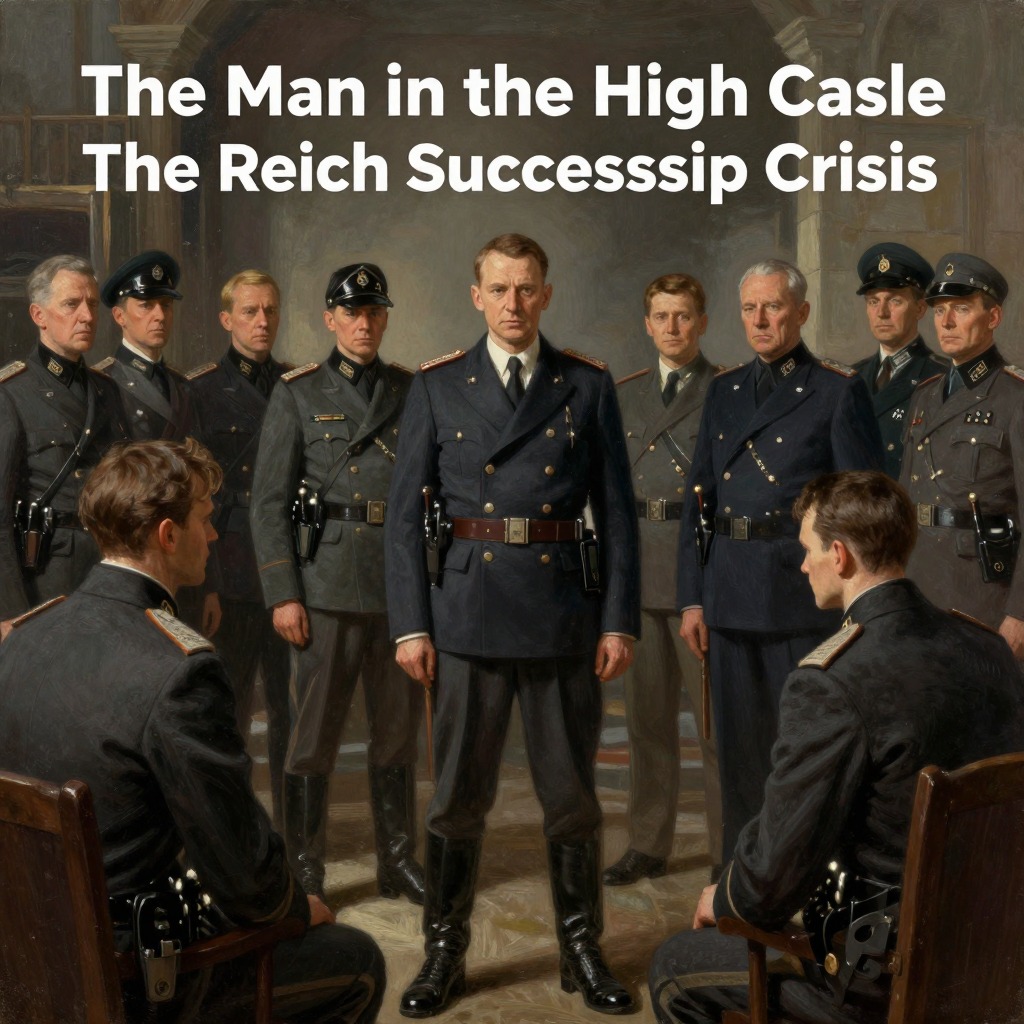
On the morning after Bormann's death, the Japanese Ambassador to the Pacific States, Baron L. B. Kaelemakule, summons an extraordinary session at the embassy building on Sutter Street. Each Trade Mission is required to send a highly placed personage, and for the ranking Trade Mission this means Mr. Tagomi himself. He arrives in a black 1940 Cadillac driven by a uniformed Chinese chauffeur, clutching an empty briefcase—a prop to avoid appearing a mere spectator. Inside, a Foreign Office representative delivers a dry, slow recitation of the leading Nazi aspirants: Hermann Goring, the self-indulgent "Fat One" who craves power like an ancient Roman Caesar; Joseph Goebbels, the brilliant orator and sole authentic intellectual of the Party; Reinhard Heydrich, the enigmatic "Hangman" whose affectivity has deteriorated into something resembling pathological schizophrenia; Baldur von Schirach, the idealist who mitigated racial extermination in the Slavic lands; and Doctor Seyss-Inquart, the most hated man in Reich territory, responsible for the genocide in Africa. As the speaker details these men's crimes—the sterilization plans, the holocaust of the African continent—Mr. Tagomi feels ill. He thinks, "I think I am going mad," and flees the meeting, running up the aisle past the other dignitaries, humiliated by his loss of composure.
Tagomi's Moral Crisis and the Aftermath
Outside, in the embassy lobby, Mr. Tagomi's panic subsides, but the revelation has poisoned his worldview. He wanders through the building, thinking, "There is evil! It's actual like cement." He cannot reconcile the existence of such systematic cruelty with his Buddhist-influenced belief in the sanctity of all life. The embassy, once a symbol of order and protocol, now feels like the antechamber to a nightmare. He later learns from a colleague at the Non-Ferrous Ores Mission that the Imperial Government's prognosis is gloomy: the worst, not the best, aspirants are likely to triumph, and the sober elements will be defeated. This knowledge deepens his despair, and he returns to his office, where he attempts to draft a message of condolence to the German consul, only to abandon it in disgust, muttering, "We are all insects."
The SD Raid and the Shooting
Days later, the embassy's role shifts from diplomatic theater to a scene of violent confrontation. When the SD attempts to seize Rudolf Wegener—the Abwehr captain posing as a Swedish businessman—inside the Nippon Times Building, Mr. Tagomi, General Tedeki, and Wegener barricade themselves in Tagomi's office. As two SD men burst in, Tagomi, armed with his treasured Colt .44 collector's item, shoots them both. The first falls instantly; the second, hit in the mouth, collapses with his jaw blown apart, making "unhuman gargling noises." Tagomi, who has never killed before, is sickened. He reloads his antique revolver with trembling hands, and when the immediate danger passes, he sits at his desk, manipulating the yarrow stalks of the I Ching, seeking an explanation for what he has done. General Tedeki observes that Tagomi, raised as a Buddhist, has no standpoint by which to comprehend his act. The embassy, which had been the site of intellectual horror, now becomes the site of physical horror, and Tagomi's psyche begins to unravel.
The Heart Attack and the Aftermath
In the days following the shooting, Mr. Tagomi cannot return to his normal routine. He wanders the city, riding cable cars and visiting Portsmouth Square, clutching the silver triangle he bought from Robert Childan, hoping it will reveal some hidden truth. But the object offers no solace. When he finally returns to the Nippon Times Building, he confronts the German consul, Hugo Reiss, who has come to smooth over the incident. Tagomi, in a state of barely controlled anguish, tells Reiss, "I personally shot your two SD men," and then, in a fit of rage, scrawls "Release" on a form requesting the extradition of Frank Frink, a Jew, to German custody. The encounter ends with Tagomi suffering a heart attack, collapsing in his office as he clutches the silver triangle. The embassy, which had been the stage for his moral awakening, now witnesses his physical breakdown—a final, visceral response to the evil he has been forced to confront.